01 — The problem
The Figma workspace was hard to navigate.
Files had no covers. No labels. No indication of what was inside.
You had to open each file to understand what it contained.
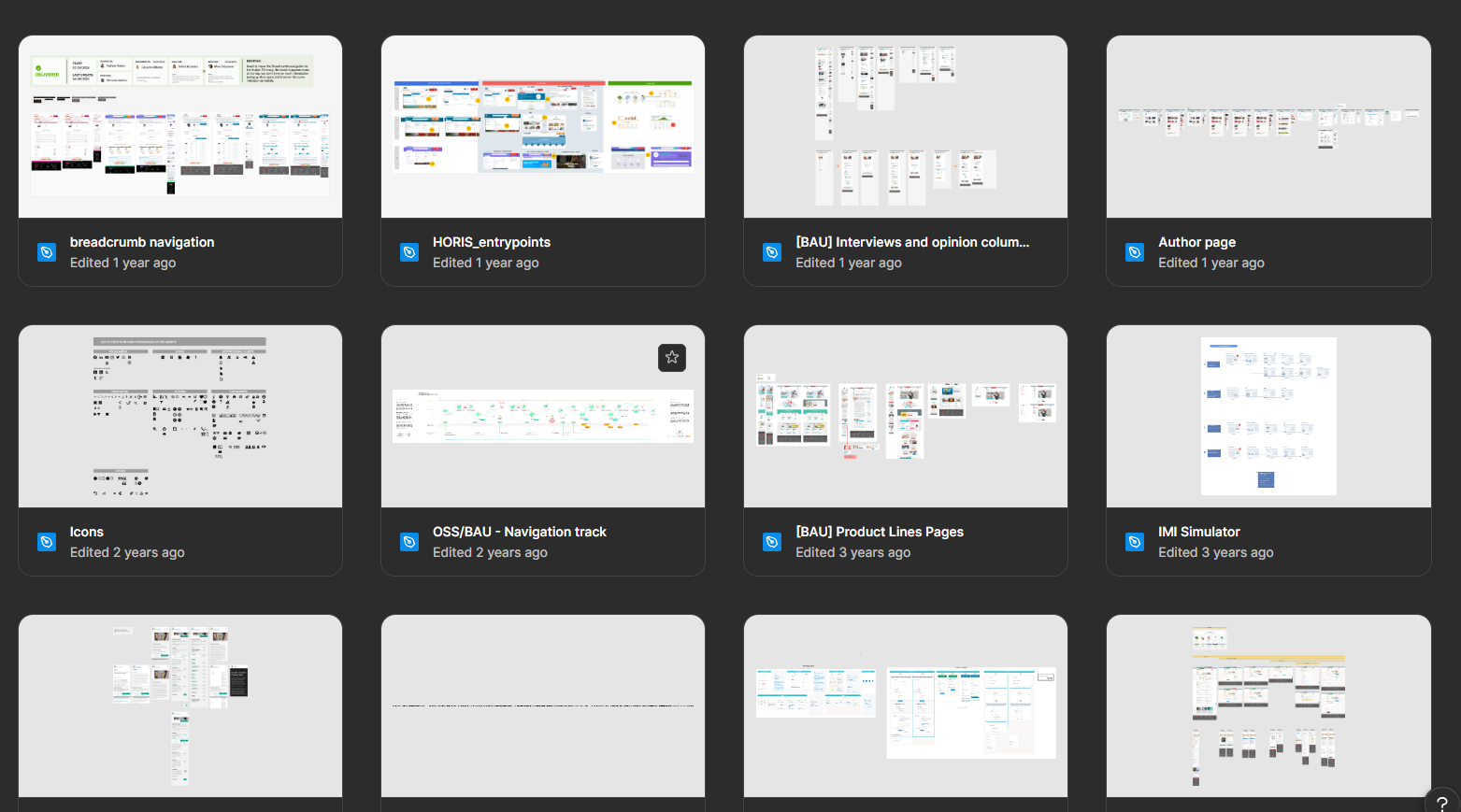 Before — files with no visual identity
Ownership was unclear. Status was invisible. Context was fragmented across multiple tools.
Information lived everywhere — and nowhere at the same time.
02 — What I introduced
Without being asked formally, I introduced two simple systems.
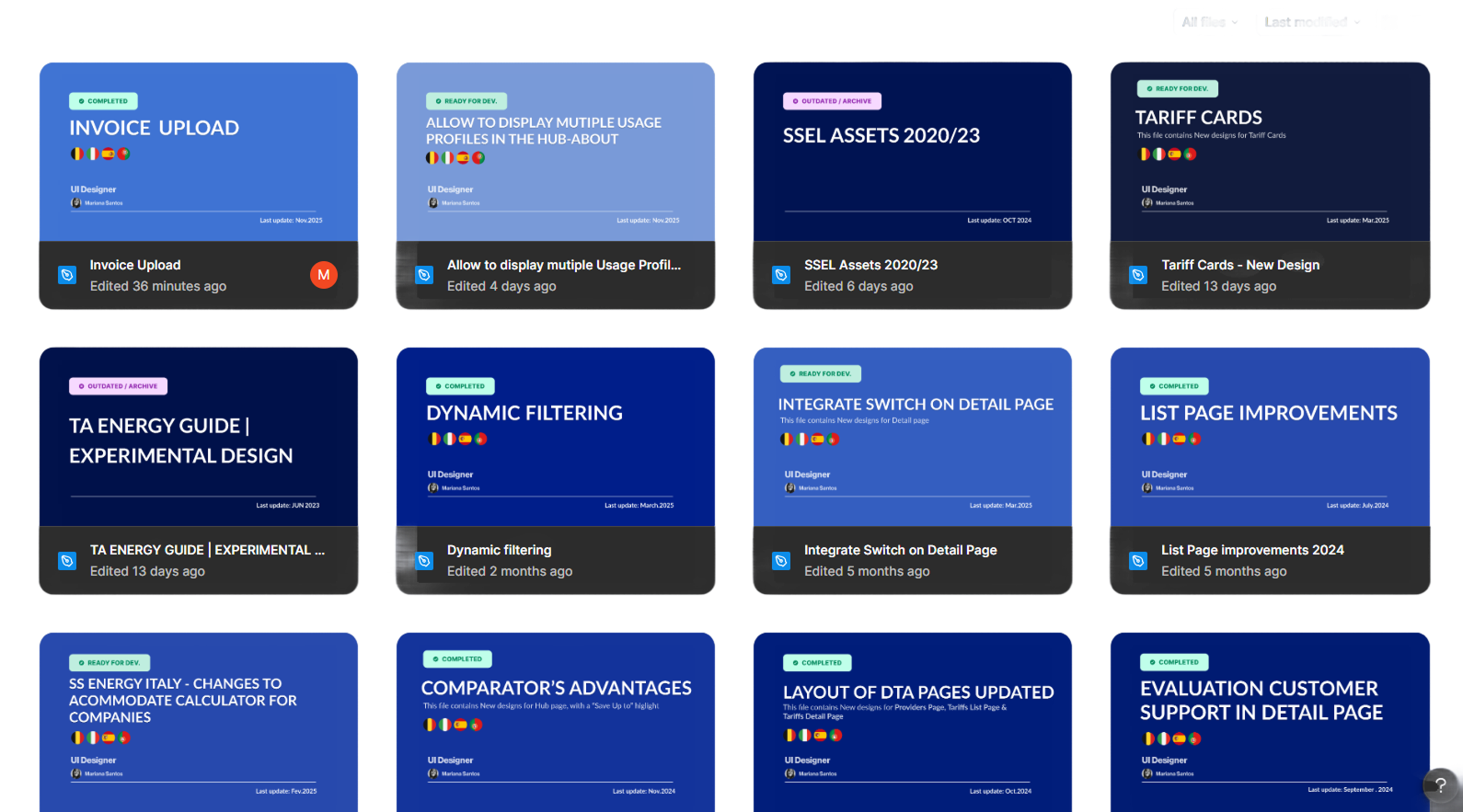
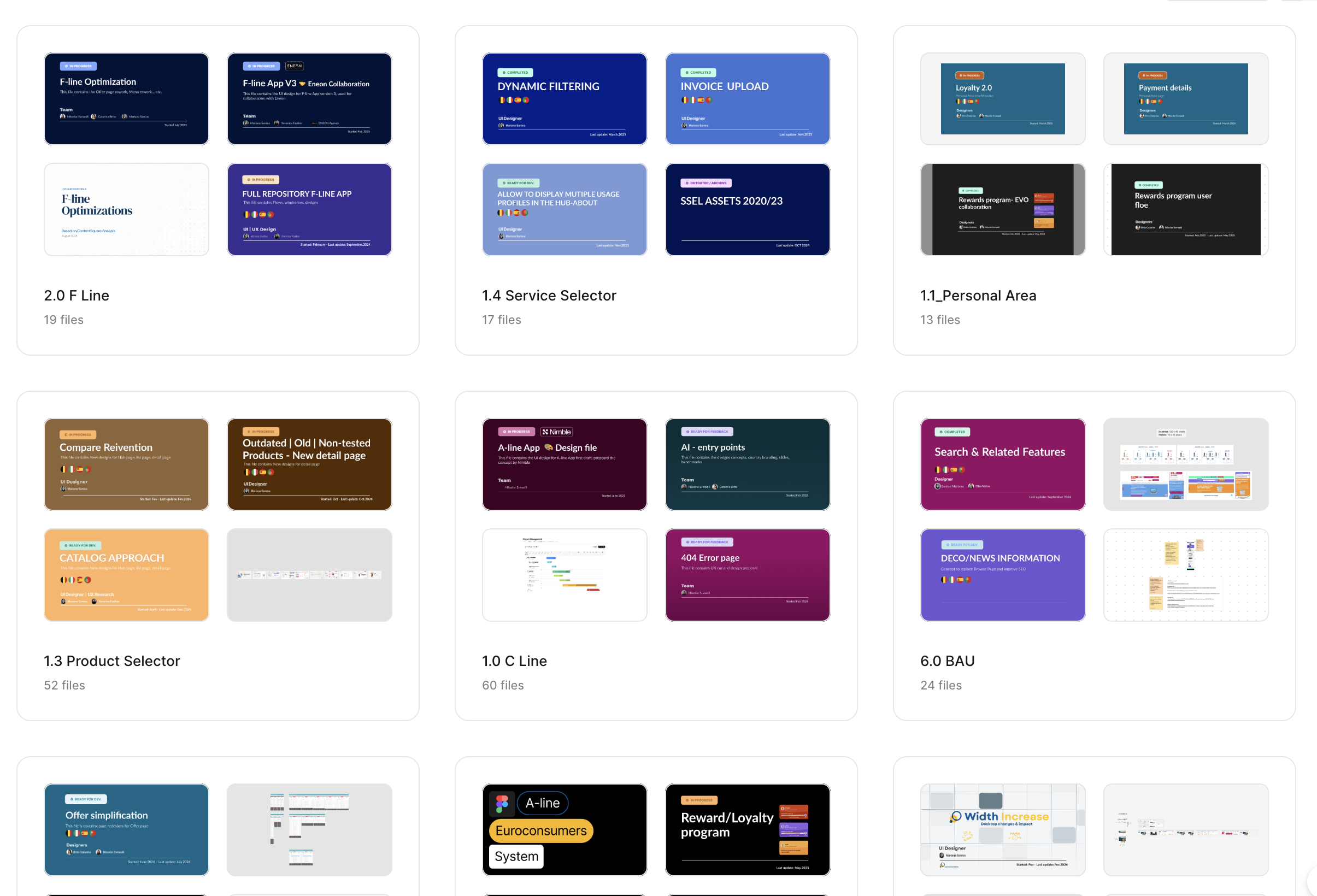
A cover system for Figma files
So file type and purpose were immediately visible — without opening anything.
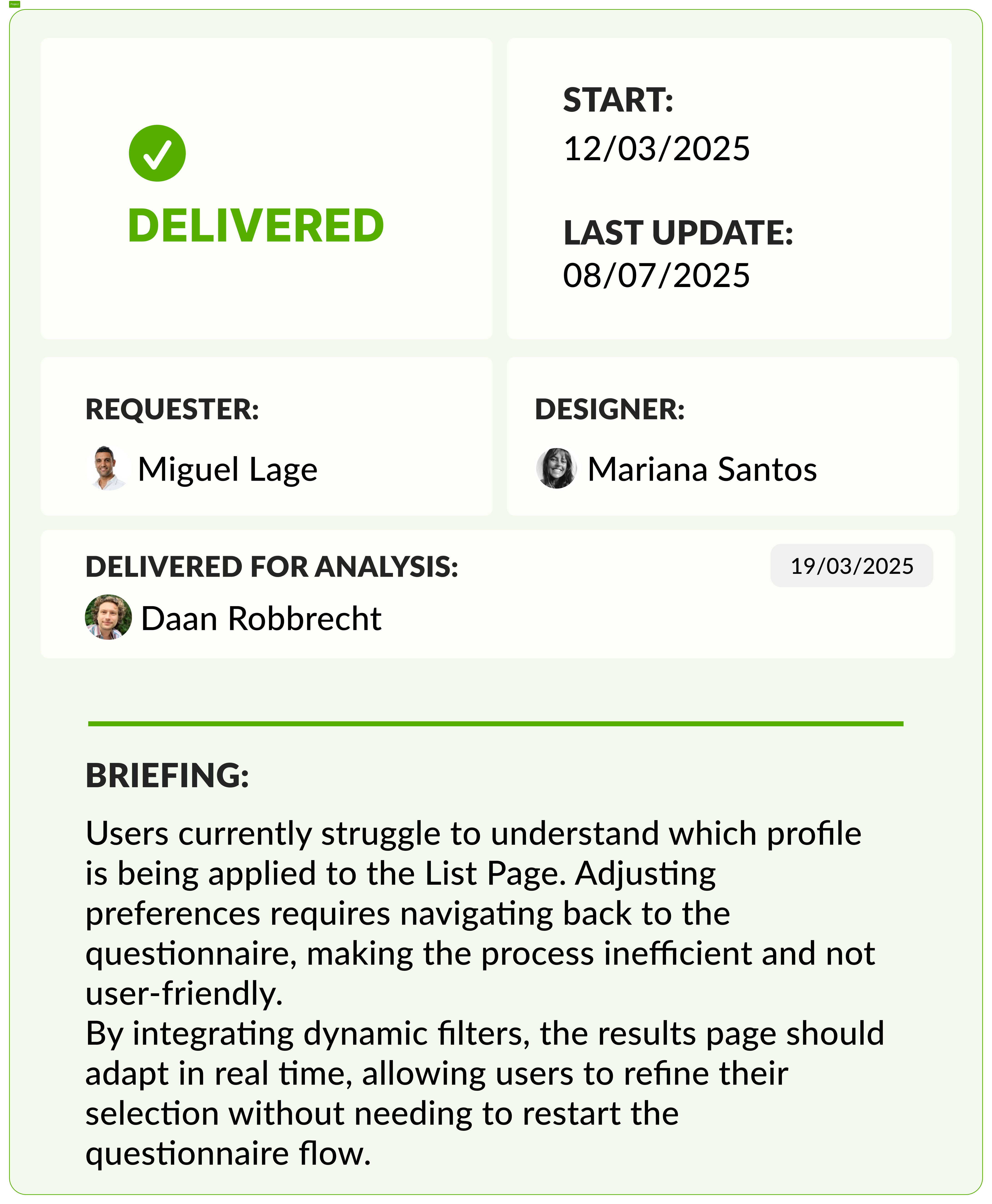
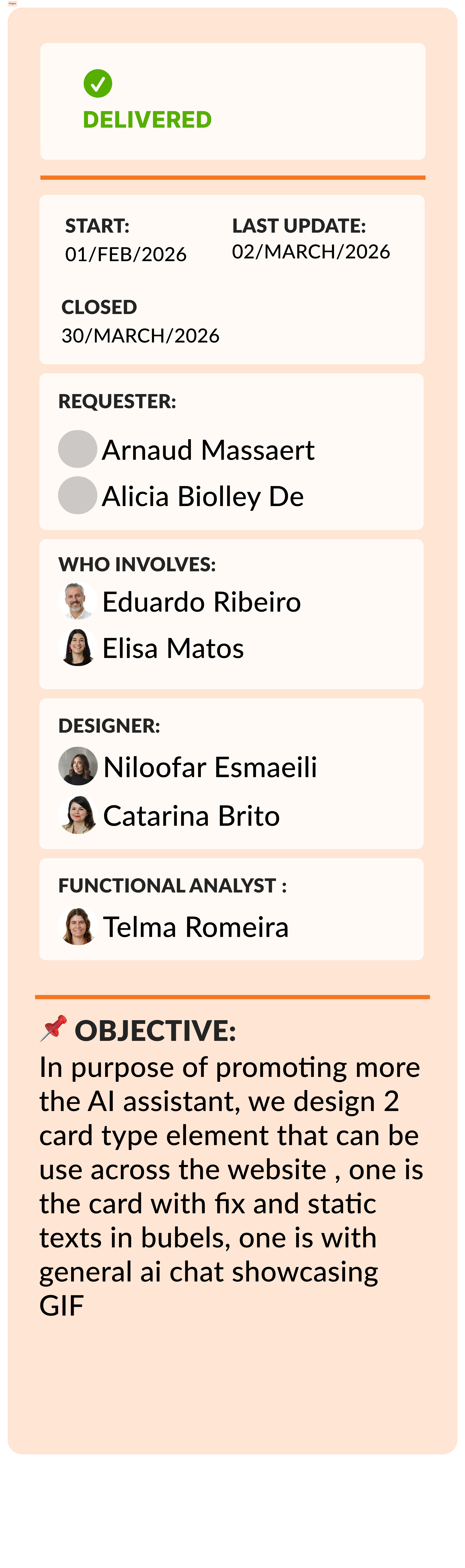
A file header / status system
To show context at a glance:
- Designer — who owns the file
- Involved people — who's collaborating
- Requester — who asked for it
- Brief / context — what the file is about
- Status — in progress, ready for feedback, complete
The system was not enforced.
It was gradually adopted by the team because it made the work easier.

03 — Why it worked
Removed guesswork
Reduced friction
Made context visible without opening each file
Team adoption happened naturally
This wasn't a redesign.
It was a small system that made the workspace usable.